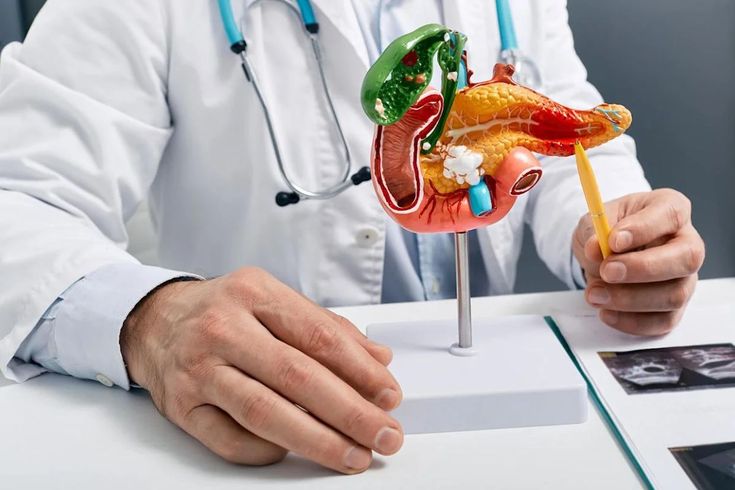
Looking expert Pancreatic Cancer Treatment in Pune, India?
Dr. Amit Parasnis, an expert cancer surgeon based in, Pune, Maharashtra offers advanced and comprehensive treatment options for pancreatic and periampullary cancers. With extensive training in these complex cancers and a patient-focused approach, Dr. Parasnis ensures that every patient receives the most effective treatment to achieve the best possible outcomes.
Understanding Pancreatic Cancer and Periampullary Cancers
Pancreatic cancer is among the most aggressive forms of cancer and belongs to a group known as periampullary cancers. These cancers develop near the ampulla of Vater—a vital junction where the common bile duct and pancreatic duct converge and drain into the duodenum, the initial segment of the small intestine.
What Are Periampullary Cancers?
Periampullary cancers can arise from several locations near the ampulla of Vater, including the pancreas, bile duct, and duodenum. These cancers share similar symptoms and treatment approaches, so they are often grouped together. Despite their proximity to vital organs, these cancers are often diagnosed at later stages due to their subtle onset.
Common Symptoms of Pancreatic and Periampullary Cancers
Pancreatic and periampullary cancers typically develop slowly, with symptoms often remaining unnoticed until the disease reaches an advanced stage. Common symptoms include:
- Unintended weight loss: A noticeable and rapid drop in weight without any changes in diet or physical activity.
- Persistent back pain: Often occurring in the upper back and can worsen over time.
- Nausea and vomiting: Frequently occurring after meals, causing discomfort.
- Jaundice: A yellow tint to the skin and eyes caused by blockage of the bile duct.
- Loss of appetite: A significant reduction in hunger, often leading to reduced food intake.
Because these symptoms can mimic other less serious health conditions, it is essential to seek medical advice promptly for a proper diagnosis.
Diagnosing Pancreatic Cancer
Early diagnosis is critical in managing pancreatic and periampullary cancers. A series of tests and imaging techniques are used to detect the presence of pancreatic tumors and assess the extent of the disease:
Diagnostic Methods Include:
- Blood Tests: To assess liver function and levels of the CA 19-9 tumor marker, which is often elevated in pancreatic and biliary cancers.
- CT Scans and PET-CT Scans: These imaging techniques help to determine the extent of the disease, whether the cancer has spread to other areas (local or distant).
- Endoscopic Ultrasound (EUS): An advanced technique used to obtain tissue samples (biopsy) from pancreatic masses for histological examination.
- Endoscopic Stenting: In cases of jaundice, an endoscopic stent may be inserted to relieve blockage of the bile duct before surgery.
Once the cancer is diagnosed, your doctor will determine the stage of the disease and develop a tailored treatment plan.
Treatment Options for Pancreatic Cancer in, Pune, Maharashtra
The management of pancreatic and periampullary cancers requires a specialized, individualized approach based on the cancer’s type and stage. The primary treatment modalities include surgical resection, chemotherapy, and radiotherapy.
Surgical Treatment – Whipple’s Procedure
The Whipple’s Pancreaticoduodenectomy is the most common and effective surgical option for pancreatic cancer. This complex surgery involves the removal of the pancreas, duodenum, gallbladder, and parts of the bile duct. It is a major surgery that requires precise skill and care to achieve the best results.
Types of Surgery:
- Open Surgery: Traditional technique involving a large incision.
- Minimally Invasive Surgery: Utilizes smaller incisions, leading to reduced pain, quicker recovery, and shorter hospital stays.
- Robotic Surgery: Cutting-edge robotic techniques for precision and reduced recovery time.
Whipple’s surgery is followed by a detailed recovery period, with a focus on proper healing of the anastomoses (surgical reconnections).
Chemotherapy and Radiotherapy
In addition to surgery, chemotherapy and radiotherapy are often used at different stages of pancreatic cancer treatment:
- Neoadjuvant Chemotherapy: Administered before surgery to shrink the tumor and make it operable.
- Adjuvant Chemotherapy: Given after surgery to eliminate remaining cancer cells and reduce the risk of recurrence.
- Palliative Chemotherapy: Administered in advanced stages to relieve symptoms, slow disease progression, and enhance quality of life.
Radiotherapy may also be recommended to target residual cancer cells after surgery or to shrink tumors in non-resectable cases.
Why Choose Dr. Amit Parasnis for Pancreatic Cancer Treatment in Pune?
Dr. Amit Parasnis is a leading expert in Pancreatic Cancer Treatment in Pune, India He offers:
- Comprehensive care: From diagnosis through to post-surgery care and rehabilitation.
- Cutting-edge technology: Advanced diagnostic and surgical techniques, including robotic surgery and minimally invasive approaches.
- Personalized Treatment Plans: Tailored to each patient’s unique condition, considering the type, stage of cancer, and overall health.
- Ethical and patient-centered care: With a focus on achieving the best outcomes with compassion and care.
Dr. Parasnis’s approach to treatment is not just about surgical intervention; he emphasizes the overall well-being and recovery of his patients, ensuring the best possible quality of life before, during, and after treatment.
FAQ
What is the survival rate for pancreatic cancer after Whipple's surgery?
The survival rate depends on the stage of the cancer at the time of surgery. For early-stage pancreatic cancer, the 5-year survival rate can be over 20%. However, if the cancer is detected later, the rate may be lower. Early diagnosis significantly improves prognosis.
What is the role of chemotherapy in pancreatic cancer?
Chemotherapy can be used before surgery to shrink the tumor, after surgery to kill remaining cancer cells, or as palliative care to ease symptoms in advanced stages. Your treatment plan will be personalized based on the stage of your cancer.
Can pancreatic cancer be treated without surgery?
In some cases, if the tumor is non-resectable, chemotherapy, radiotherapy, or palliative care may be options. However, surgical resection offers the best chance for a cure if the cancer is localized.
Is robotic surgery a better option for pancreatic cancer?
Robotic surgery allows for more precise movements and smaller incisions, which can lead to quicker recovery times and less postoperative pain compared to traditional open surgery. However, the suitability of robotic surgery depends on the specific case.
How long is the recovery period after Whipple’s surgery?
Recovery time can vary, but patients typically stay in the hospital for 7-10 days post-surgery. Full recovery can take several months, with close monitoring and follow-up care to ensure proper healing.