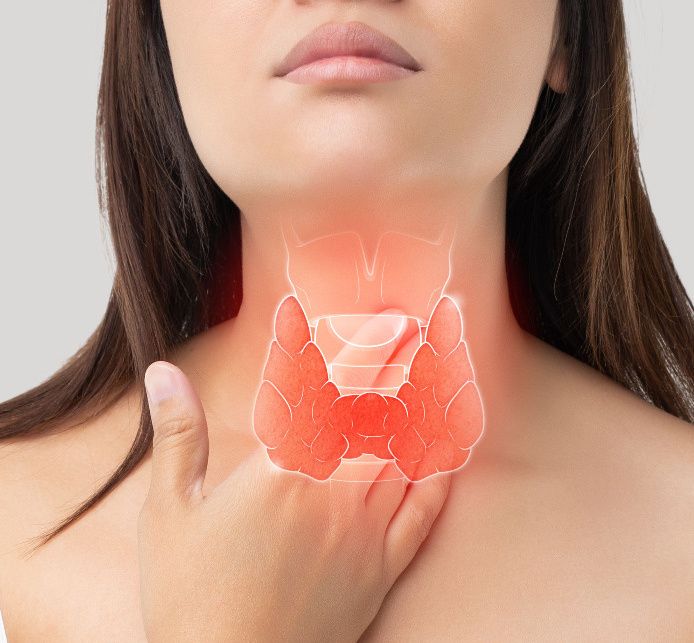
Looking for expert treatment for Thyroid Cancer and Multinodular Goitre in Pune?
Dr. Amit Parasnis, a highly skilled and experienced surgeon in Pune, India specializes in comprehensive care for thyroid disorders, including Thyroid Cancer and Multinodular Goitre. With a patient-centered approach and the latest advancements in medical treatment, Dr. Parasnis provides the most effective solutions for your thyroid health.
What is Thyroid Cancer?
Thyroid Cancer occurs when abnormal cells in the thyroid gland (a butterfly-shaped gland in the neck) begin to grow uncontrollably. The thyroid is responsible for producing hormones that regulate metabolism, heart rate, and other important bodily functions. When cancer develops in the thyroid, it can affect these functions, leading to a range of symptoms such as neck pain, difficulty swallowing, or a lump in the neck.
There are different types of thyroid cancer, including:
- Papillary Thyroid Cancer: The most common form, often seen in younger individuals.
- Follicular Thyroid Cancer: Less common but can be more aggressive.
- Medullary Thyroid Cancer: Often associated with genetic mutations.
- Anaplastic Thyroid Cancer: A rare, fast-growing cancer that requires immediate treatment.
What is Multinodular Goitre?
A Multinodular Goitre is a condition characterized by the growth of multiple nodules (lumps) in the thyroid gland. These nodules can vary in size and may cause the thyroid to enlarge. Although most cases of multinodular goitre are benign, they can sometimes develop into thyroid cancer or cause symptoms like neck swelling, difficulty breathing, or swallowing. In some instances, the goitre can affect the production of thyroid hormones, leading to hypothyroidism (low thyroid function) or hyperthyroidism (high thyroid function).
Symptoms of Thyroid Cancer and Multinodular Goitre
Thyroid Cancer and Multinodular Goitre can present with similar symptoms, though the severity and nature of the symptoms can vary based on the individual and the type of thyroid condition. Common symptoms include:
- Neck lump or swelling: Often painless and noticeable when touched.
- Neck pain: A dull pain or tenderness in the neck region.
- Difficulty swallowing or breathing: Caused by the pressure exerted by an enlarged thyroid or goitre.
- Hoarseness: A change in voice, often due to vocal cord involvement.
- Fatigue: Feeling unusually tired or weak.
- Weight changes: Unexplained weight gain or loss, depending on the thyroid hormone imbalance.
- Changes in heart rate: Increased or decreased heart rate due to thyroid dysfunction.
If you experience any of these symptoms, it’s important to seek medical attention to rule out thyroid cancer or multinodular goitre and determine the appropriate treatment.
Diagnosis of Thyroid Cancer and Multinodular Goitre
To diagnose Thyroid Cancer or Multinodular Goitre, a variety of diagnostic tests and procedures are used, including:
-
Physical Examination
A thorough physical exam will be conducted to check for visible lumps, signs of goitre, and assess the general health of the thyroid.
-
Blood Tests
Blood tests are performed to evaluate thyroid function by measuring TSH (Thyroid Stimulating Hormone), T3, and T4 levels, as well as thyroid antibodies to detect autoimmune diseases that may be causing the thyroid issues.
-
Ultrasound
An ultrasound is often the first imaging test used to assess the size, number, and structure of thyroid nodules. This test can help determine whether the nodules are solid or fluid-filled.
-
Fine Needle Aspiration (FNA) Biopsy
If a nodule is detected, a biopsy may be recommended to obtain a sample of tissue to determine whether the nodule is benign or malignant (cancerous).
-
CT Scan or MRI
In certain cases, CT scans or MRIs may be used to assess the extent of the disease or identify if cancer has spread to nearby tissues.
Treatment Options for Thyroid Cancer and Multinodular Goitre in Pune, India
Effective treatment for Thyroid Cancer and Multinodular Goitre depends on the type, size, and spread of the condition. Dr. Amit Parasnis offers the latest treatment options tailored to your specific needs:
-
Surgery for Thyroid Cancer and Goitre
The primary treatment for Thyroid Cancer and large Multinodular Goitre is surgery. There are two main types of surgery that may be recommended:
- Total Thyroidectomy: The complete removal of the thyroid gland, typically performed in cases of thyroid cancer.
- Lobectomy: The removal of one lobe of the thyroid, which may be sufficient for benign multinodular goitre or small localized cancers.
In some cases, lymph node dissection (removal of nearby lymph nodes) may be necessary if the cancer has spread.
-
Radioactive Iodine Therapy
For certain types of Thyroid Cancer, radioactive iodine therapy may be used after surgery to target any remaining cancerous cells. This treatment is effective for cancers that absorb iodine, such as papillary and follicular thyroid cancers.
-
Thyroid Hormone Replacement
After thyroid surgery, patients will need lifelong thyroid hormone replacement therapy to maintain normal metabolism and other bodily functions. This typically involves taking synthetic thyroid hormones (levothyroxine) to compensate for the absence of the thyroid gland.
-
Radioactive Iodine Therapy for Multinodular Goitre
In some cases, radioactive iodine treatment may be used to shrink goitre nodules, especially when they are causing symptoms or are functioning abnormally.
-
Observation and Monitoring
For small and asymptomatic nodules in cases of Multinodular Goitre, regular monitoring with ultrasounds and blood tests may be sufficient. Surgical intervention may only be required if the goitre causes significant symptoms or complications.
Why Choose Dr. Amit Parasnis for Thyroid Cancer and Multinodular Goitre Treatment in Pune?
Dr. Amit Parasnis is one of the most experienced surgeons in Pune, India specializing in Thyroid Cancer and Multinodular Goitre Treatment. He offers:
- Comprehensive Care: A holistic approach to diagnosis, treatment, and post-surgical care.
- State-of-the-art Technology: Utilization of the latest diagnostic tools and minimally invasive surgical techniques.
- Personalized Treatment Plans: Tailored treatment plans based on the type and stage of the condition.
- Patient-Centered Approach: Ensuring comfort, clear communication, and the best possible outcomes for every patient.
Dr. Parasnis’s expertise in thyroid disorders ensures that every patient receives the most effective and appropriate care for optimal results.
FAQ
What are the symptoms of thyroid cancer?
Common symptoms include neck lumps, hoarseness, neck pain, difficulty swallowing, fatigue, and unexplained weight changes.
Can multinodular goitre lead to thyroid cancer?
While most cases of multinodular goitre are benign, in some instances, the nodules can develop into cancer. Regular monitoring and timely treatment can help reduce risks.
How is thyroid cancer diagnosed?
Thyroid cancer is diagnosed through a combination of physical exams, blood tests, ultrasounds, fine needle aspiration (FNA) biopsies, and imaging tests like CT scans or MRIs.
How is multinodular goitre treated?
Treatment options for multinodular goitre include surgery (total thyroidectomy or lobectomy), radioactive iodine therapy, or careful monitoring for asymptomatic cases.
What is the recovery time after thyroid surgery?
Recovery time varies depending on the type of surgery and individual health. Generally, patients can return to normal activities within a few weeks, although full recovery may take several months.