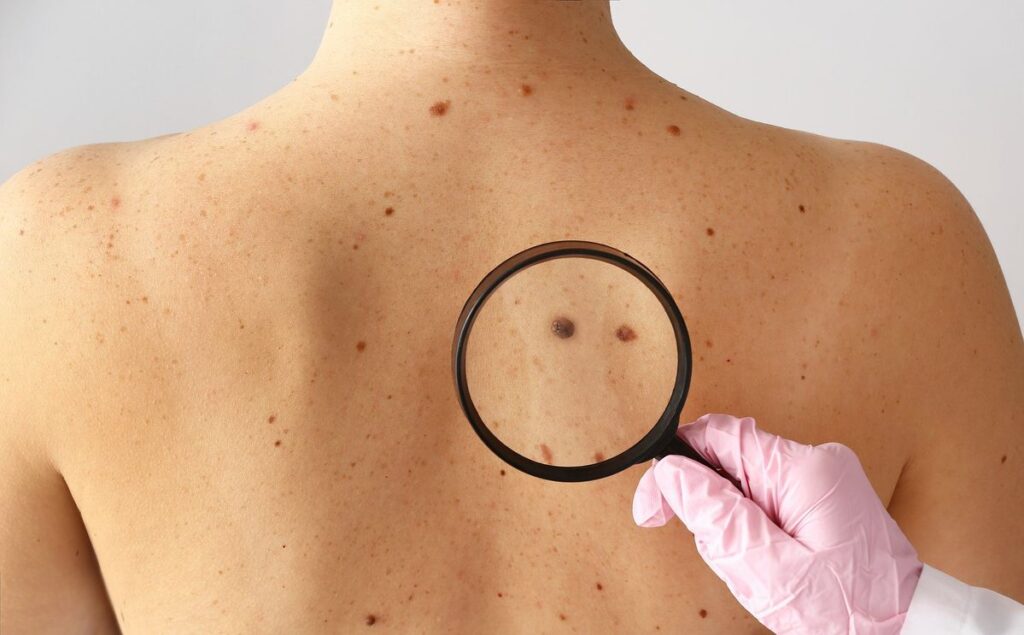
Looking for effective Skin Cancer treatment in Pune, Maharashtra?
Skin cancer is one of the most common types of cancer, but it is highly treatable when detected early. Dr. Amit Parasnis, a leading oncologist and surgeon specializing in Skin Cancer treatment in Pune, offers comprehensive care using the latest advancements in diagnostics and treatment. With a focus on personalized treatment plans and the best patient outcomes, Dr. Parasnis is committed to providing the highest standard of care for skin cancer patients.
Types of Skin Cancer
Skin Cancer refers to the abnormal growth of skin cells, usually in areas exposed to the sun. The most common types of skin cancer are:
-
Basal Cell Carcinoma (BCC)
Basal cell carcinoma is the most common form of skin cancer. It typically appears as a small, pearly bump on the skin and is usually found on sun-exposed areas like the face, neck, and ears. BCC is slow-growing and rarely spreads to other parts of the body, but if left untreated, it can cause significant tissue damage.
-
Squamous Cell Carcinoma (SCC)
Squamous cell carcinoma is the second most common type of skin cancer. It typically appears as a firm, red nodule or a scaly patch on the skin. SCC can spread to other parts of the body if not treated promptly, and it is often seen in areas exposed to the sun, such as the face, ears, and hands.
-
Melanoma
Melanoma is the most aggressive form of skin cancer and can develop from an existing mole or appear as a new dark spot on the skin. Melanoma can spread rapidly to other organs if not diagnosed and treated in its early stages. It is often characterized by irregular borders, uneven color, and an increase in size over time.
Symptoms of Skin Cancer
The symptoms of skin cancer may vary based on the type and location, but common signs include:
- New or changing moles: Watch for moles that change in shape, color, or size.
- Itching or tenderness: Skin cancer lesions can often be painful or itchy.
- Bleeding or oozing: If a mole or skin lesion starts bleeding or oozing, it should be examined by a doctor.
- A raised or irregularly shaped lump: Skin cancer lumps may feel firm or hard.
- Scaly or crusty patches: Squamous cell carcinoma may cause scaly or crusted patches on the skin.
- Dark spots: Melanomas often appear as dark brown or black spots with irregular edges.
Diagnosis of Skin Cancer
To diagnose skin cancer, Dr. Amit Parasnis will perform a detailed examination and may recommend the following tests:
-
Skin Biopsy
A biopsy is the primary method for diagnosing skin cancer. During this procedure, a small sample of the suspicious area is removed and sent to the lab for analysis.
-
Dermoscopy
A dermoscopy is a non-invasive examination using a special instrument to magnify the skin’s surface. It helps in identifying melanoma and other skin cancers by analyzing patterns of pigmentation.
-
Imaging Tests
If skin cancer is suspected to have spread, imaging tests like CT scans, MRI, or PET scans may be used to determine the extent of the disease.
Treatment Options for Skin Cancer in Pune, India
The treatment of Skin Cancer depends on the type, size, and location of the cancer, as well as the patient’s overall health. Dr. Amit Parasnis offers the following treatment options:
-
Surgical Excision
The most common treatment for skin cancer is the surgical removal of the tumor. This involves cutting out the cancerous tissue along with some surrounding healthy tissue to ensure complete removal. Dr. Parasnis performs this surgery with great precision, using both traditional and minimally invasive techniques to ensure the best outcomes.
-
Mohs Surgery
Mohs surgery is a highly effective technique used for removing basal cell carcinoma and squamous cell carcinoma, especially in areas where preserving healthy tissue is important (such as the face). The procedure involves removing thin layers of skin tissue and examining them immediately under a microscope until no cancerous cells remain.
-
Cryotherapy
Cryotherapy uses extreme cold to destroy abnormal skin cells, and it is often used for precancerous lesions or early-stage skin cancer. It is a minimally invasive procedure with minimal recovery time.
-
Radiation Therapy
In cases where surgery may not be an option, or if the cancer is in a location that is difficult to treat, radiation therapy may be used. Radiation targets and destroys cancerous cells, preventing their growth.
-
Chemotherapy
Chemotherapy is generally reserved for advanced cases of skin cancer, particularly melanoma. It can be administered topically or systemically (oral or intravenous), depending on the stage of the cancer.
-
Immunotherapy
For advanced melanoma, immunotherapy can be used to stimulate the immune system to fight cancer. This treatment has shown promising results in cases where traditional treatments are not effective.
-
Topical Treatments
For some types of skin cancer, especially superficial basal cell carcinoma, topical treatments such as 5-fluorouracil (5-FU) or imiquimod can be used. These treatments are applied directly to the skin lesion and work by killing the cancerous cells.
Why Choose Dr. Amit Parasnis for Skin Cancer Treatment in Pune, Maharashtra?
Dr. Amit Parasnis is a leading specialist in skin cancer treatment in Pune, known for his expertise in the diagnosis and management of various types of skin cancer, including melanoma, basal cell carcinoma, and squamous cell carcinoma. Here’s why you should choose Dr. Parasnis for your skin cancer treatment:
- Comprehensive Care: From diagnosis to post-treatment care, Dr. Parasnis provides a full spectrum of services to ensure the best possible outcome.
- Cutting-Edge Technology: Dr. Parasnis uses the latest diagnostic tools and treatment techniques, ensuring high-quality care with minimal downtime.
- Personalized Treatment Plans: Each patient receives a treatment plan tailored to their specific type of skin cancer and personal needs.
- Minimally Invasive Options: When possible, Dr. Parasnis offers minimally invasive treatments to reduce recovery time and improve results.
- Experienced Surgeon: With years of experience in treating skin cancer, Dr. Parasnis is dedicated to delivering the best oncological outcomes.
FAQ
What are the early signs of skin cancer?
Common early signs include new or changing moles, unusual skin growths, bleeding or oozing moles, and dark spots with irregular borders.
Can skin cancer be prevented?
While it’s not always possible to prevent skin cancer, protecting your skin from excessive sun exposure, wearing sunscreen, and avoiding tanning beds can significantly reduce your risk.
How is skin cancer diagnosed?
Skin cancer is diagnosed through a physical examination, biopsy, dermoscopy, and in some cases, imaging tests like CT or MRI scans.
What is the recovery time after skin cancer surgery?
Recovery time depends on the extent of the surgery. For smaller excisions, recovery may take a few weeks, while larger surgeries or Mohs surgery may take longer.
Is skin cancer treatable?
Yes, skin cancer is highly treatable, especially when caught early. The treatment options, including surgery, radiation, and chemotherapy, can effectively remove or destroy cancer cells.